Moisture Mitigation Systems vs. Vapor Barriers: What's the Difference?
If you manage or renovate buildings in Nashville, TN, you have likely heard both "vapor barrier" and "moisture mitigation system." They sound similar, but they solve different moisture problems at different points in a floor's life. This guide explains each option in plain language so you can protect your new or existing floors with confidence.
At Rejuvenate Flooring, our flooring contractor team helps owners, GCs, and facility managers choose the right path for concrete slabs throughout Nashville neighborhoods like The Gulch, Germantown, Green Hills, East Nashville, Brentwood, and Franklin. The right choice depends on building age, slab conditions, schedule, and the floor covering you plan to install.
What Is a Vapor Barrier Under a Slab?
A vapor barrier is a sheet of durable plastic placed below a concrete slab during new construction. It is designed to slow the rise of water vapor from the ground into the concrete. When seams are sealed and penetrations are detailed well, it helps keep the slab drier for the life of the building.
Installers typically place the barrier over compacted base material, tape the seams, seal around pipes, and then pour the slab. On a well-managed jobsite, workers protect the barrier from punctures before the concrete goes in. Done right, the barrier becomes a long-term defense against moisture traveling upward.
When a Vapor Barrier Is Used
Vapor barriers are used during new construction or major slab replacement. They are common for retail buildouts in new shell spaces, schools, healthcare facilities, and offices. In Middle Tennessee, where soil moisture and seasonal humidity swing widely, a quality vapor barrier helps reduce future risks when tenants switch to moisture-sensitive floors like LVT, rubber, or wood.
What Is a Moisture Mitigation System?
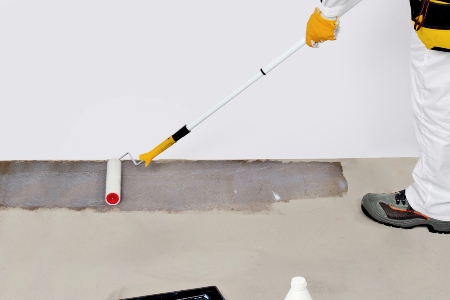
A moisture mitigation system is a surface-applied treatment installed on top of an existing concrete slab. Many systems are two-part epoxy or similar materials designed to reduce the amount of moisture that can move through the slab and reach adhesives or floor finishes.
Before application, a professional crew cleans, shot-blasts, and profiles the surface so the coating bonds tightly. After the system cures, compatible primers, adhesives, and the new floor are installed. The goal is to create a stronger, more reliable barrier between the concrete and your finished floor.
When a Mitigation System Is Used
Mitigation systems are used in existing buildings when a vapor barrier is missing, damaged, or unknown, or when testing shows the slab is too wet for the planned flooring. This is common across older Nashville properties, from historic brick buildings in downtown to 1980s tilt-wall warehouses in Smyrna and La Vergne. Renovations often switch to denser, low-permeability floors, so even a slightly damp slab can cause adhesive failure, cupping, or bubbles without mitigation.
Key Differences Between Vapor Barriers and Mitigation Systems
- Location: A vapor barrier lives under the slab. A mitigation system lives on top of the slab.
- Timing: Vapor barriers are installed before the pour. Mitigation systems are installed during renovation or right before flooring in existing spaces.
- Main Purpose: Vapor barriers stop ground moisture from entering the slab. Mitigation systems reduce moisture moving from the slab into adhesives and finishes.
- Access: You cannot add a vapor barrier to an existing slab without demo. You can add a mitigation system with proper surface prep.
- Risk Profile: A good barrier lowers long-term risk. A good mitigation system controls present risk when conditions are not ideal.
Why Existing Nashville Commercial Buildings Often Need Mitigation
Nashville's humid summers, spring storms, and proximity to the Cumberland River mean moisture loads can rise quickly. Many older slabs were poured without a modern vapor barrier, or the barrier may be unknown. During tenant improvements, fast schedules sometimes bring floors in before the slab is dry enough. New low-VOC adhesives and dense floor products also tolerate less moisture than older materials.
All of that adds up to a simple truth: most renovation projects should assume moisture risk until testing proves otherwise. If the slab exceeds the limits for your floor or adhesive, a mitigation system can bring conditions back within range and help your project stay on track.
How Flooring Contractors Diagnose Slab Moisture
Before any recommendation, a professional flooring contractor performs objective tests. Common methods include in-situ relative humidity testing inside the slab and surface moisture emission tests. pH readings help confirm whether the concrete's alkalinity could attack adhesives. A visual survey checks for prior adhesive residue, coatings, efflorescence, and signs of past leaks.
Because moisture readings shift with the seasons here, testing during the humid months or after rain can reveal worst-case conditions. In downtown towers or medical spaces, HVAC cycles matter as well. Testing should reflect the actual service conditions of the space whenever possible.
What To Expect During a Professional Moisture Mitigation Project
Every building is unique, but a typical Nashville project follows a clear sequence to control risk and reduce downtime.
- Site Review and Testing: Map test locations across the slab, including edges, columns, and areas near exterior doors or dock doors.
- Surface Prep: Remove adhesives and coatings. Shot-blast the slab to the required concrete surface profile so the system bonds tightly.
- Crack and Joint Treatment: Fill non-structural cracks and treat control joints per product guidelines.
- Apply Mitigation System: Install the moisture control coating at the specified coverage rate and thickness.
- Confirm Cure and Compatibility: Verify cure time and perform adhesion checks with the selected primers, adhesives, and flooring.
- Floor Installation: Install the floor according to the manufacturer's instructions for moisture limits, trowel size, and roll timing.
Throughout the process, dust control and worker safety are critical. Professional crews use vacuums with proper filters during shot-blasting and grinding to manage silica dust and keep neighboring tenants comfortable.
Local tip: Nashville's humidity peaks in late spring and summer. Scheduling moisture testing when the HVAC is running and the space is at normal service temperature yields readings closer to real-world conditions and helps avoid surprises right before move-in.
How To Choose Between Vapor Barriers and Mitigation Systems
Ask first: Are we building new or renovating? If the slab is not yet poured, a high-quality vapor barrier with careful detailing is the best baseline. If you are renovating or the slab already exists, moisture testing will guide the decision. When numbers exceed your flooring limits, a mitigation system is the practical fix without tearing out concrete.
Project goals matter too. For a fast retail refresh in Green Hills, a mitigation system can keep schedules intact. For a new healthcare wing in Midtown, specifying the right vapor barrier at design helps protect sensitive floors in the years ahead.
Common Myths and Mistakes To Avoid
- "The building feels dry, so the slab must be dry." Interior comfort is not a moisture test. Concrete can hold significant moisture even when the air feels fine.
- "A new concrete slab is ready for flooring after a few weeks." Drying depends on thickness, mix, and conditions. Many slabs need longer before finishes are safe.
- "Paint-on primers are all the same." Not true. Systems vary in chemistry, coverage rates, and moisture-reduction capabilities. Follow the specs for your floor.
- "We can skip surface prep." Skipping prep leads to poor bond and failure. Proper surface profile is non-negotiable.
Local Factors That Influence Moisture in Nashville, TN
In flood-prone zones or near creeks, groundwater can push extra moisture into slabs. Buildings with large roll-up doors in areas like Antioch or Berry Hill see daily humidity swings that drive vapor into the concrete. Older downtown structures often have unknown sub-slab conditions. Warehouses converted to creative offices in The Nations may also encounter residues from past uses that complicate adhesives.
Because of these variables, partnering with a contractor who understands Nashville's building stock reduces change orders and rework. Local knowledge helps predict where moisture will show up and how to detail transitions, thresholds, and slab edges that are unique to each neighborhood.
Flooring Types That Are Most Sensitive to Moisture
Some finishes breathe. Others trap moisture. Dense, non-breathable products are more likely to fail when the slab is high in moisture.
High-attention finishes include:
Luxury vinyl tile and plank, rubber flooring, sheet vinyl, epoxy terrazzo, engineered wood, and many sound-control underlayments. These materials can blister, curl, or discolor if vapor drives into adhesives from below. When renovations in SoBro or The Gulch switch from carpet to hard-surface floors, mitigation often becomes part of the plan to keep warranties intact.
How Moisture Mitigation Protects Your Schedule and Warranty
Most flooring and adhesive warranties include moisture limits. If testing shows values above those limits, installing without mitigation can void coverage and lead to early failure. A correctly specified mitigation system reduces the moisture transmission rate, allowing adhesives to do their job. It also provides a more stable surface that helps crews install more quickly and more cleanly.
On tight timelines, mitigation can be the difference between opening day and a painful delay. It turns an unknown risk into a managed, documented step that supports the rest of the finishing work.
Signs Your Slab May Need Attention
Watch for these clues during walk-throughs or demos:
Adhesive residue that is soft or re-emulsified, white powder at joints or slab edges, visible bubbles under existing vinyl, dark staining near perimeter walls, or odors after rain. None of these proves a problem on its own, but they are strong reasons to test before you schedule new floors.
Pre-Construction Checklist for Vapor Barriers
When building new space in Nashville, a simple checklist helps your team avoid headaches later:
- Select a barrier rated for your project's performance needs.
- Require taped seams, sealed penetrations, and puncture protection during placement.
- Coordinate with the plumbing and electrical subs to ensure late trenching does not damage the barrier.
- Confirm placement details near edges, joints, and column bases where leaks often start.
Post-Installation Best Practices For Mitigation Systems
For existing slabs, success comes from discipline. Follow the product's surface prep, coverage rate, cure time, and adhesive compatibility rules. Maintain temperature and humidity during the install and early occupancy so the system can perform as designed. Document every step with photos and logs for your records.
One more reminder: never cover a questionable slab without testing. A few hours of testing can save weeks of repair work and protect your investment in finishes and furniture.
Ready To Protect Your Floors?
If you are planning a renovation in Nashville, TN, and want a clear path to a durable floor, Rejuvenate Flooring is ready to help. Speak with a specialist at 866-328-4114 to schedule moisture testing and a tailored plan. We will assess whether a pre-construction vapor barrier or a post-installation moisture mitigation system is the right solution for your space, timeline, and floor finish.
When it comes to moisture mitigation systems in Nashville, give us a call. We're the experts to choose for flooring contractor services in the Nashville area.

What Our Clients Say About Our Work
Amazing work and such a cool crew. Love the creative ideas given throughout the project. [...]
- C NRejuvenate gave me the floor of my dreams in my primary suite, white epoxy. Everyone who visits my home goes crazy over them. [...]
- Donna K.Blake did the best job on my floors for my shop, I get compliments all the time, would recommend again! [...]
- Quionna P.Schedule Your Free On-Site Flooring Consultation.
Contact Our Flooring Contractors Today!